You may have heard the story before:
Gilgamesh, devastated by the death of his friend, decides to seek the source of immortality to avoid death and gain eternal life. He seeks out Utanapishtim, the only person who survived the flood of the world, for advice. He tells him about a plant found at the bottom of the sea that restores youth in old age. Gilgamesh finds the plant and returns home with it. When he was not far from home, he wants to bathe in water, so he puts the plant on the ground. But suddenly a snake crawls up and takes the plant. Gilgamesh thus definitively loses his immortality. Instead of seeking immortality, he should enjoy earthly life.
Since time immemorial
The template of this work - the Epic of Gilgamesh - come from the twentieth century before Christ. Its theme, as revealed by the content of this work, is the search for immortality. The epic proves that the question of how to escape mortality is as old as humanity itself. Ancient fables also talk about beings who try to resemble gods, and this always means trying to obtain immortality, because it is a property of gods.
To the present
Mankind was looking for answers to the question of how to escape mortality 4000 years ago and is still looking for them today. For example, for several decades now, private companies around the world have been offering the possibility of freezing the bodies of terminally ill people, with the understanding that one day they will be thawed so that they can be cured of a disease that is currently incurable.
The desire for immortality is the driving force behind a large industry of business. Delaying death, slowing down aging or masking the changes caused by age are all business models with guaranteed returns. A very good example is the cosmetics industry, corrective medicine or the pharmaceutical industry. The common denominator of these industries is conscious work with the fear of the inevitability of decline and death, while they often offer their customers only the illusion of a solution.

Can mortality be overcome?
The inevitability of death is simply a reality from which we cannot escape. Or yes? For example, the ancient philosopher Plato says that "love is the desire for immortality". So, he recommends to love, which means to live for (someone or something). After all, living is the opposite of death.
Others are of the opinion that we can live even after death in our descendants. In this sense, the research results are interesting, that in communities and times of prosperity or abundance, the birth rate decreases, and vice versa, where there is poverty, fear of survival and existential uncertainty, the birth rate increases. The fear of danger seems to automatically lead to the desire to preserve and give life.
Well, then there is the doctrine of some religions, such as Christianity, about eternal life. Life does not end with death, on the contrary, it reaches its fulfillment. In them, death is understood as a gateway to the fullness of life.
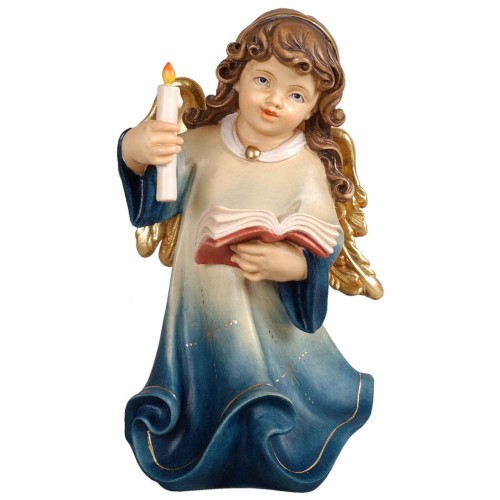
The first week of November is a time when, more than ever, we think about those who are no longer with us. For some, these are days of intense memories, for others, days of hope and faith in eternal life.
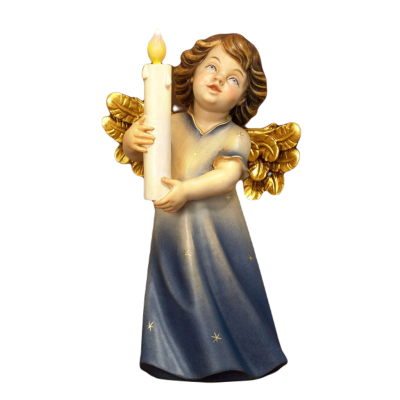
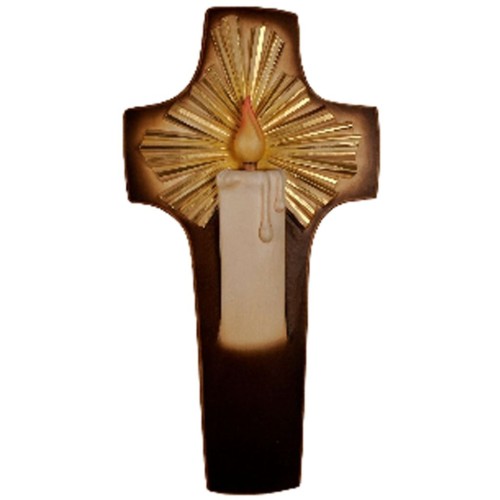
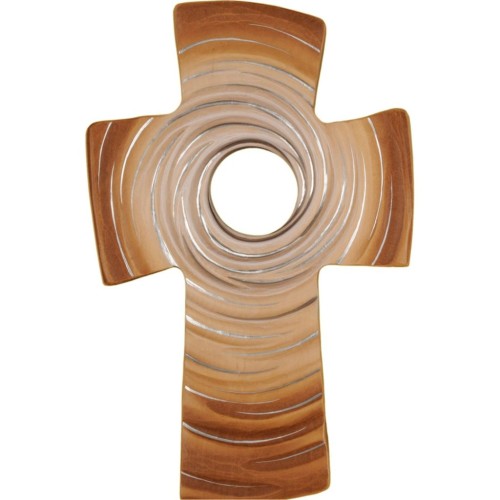
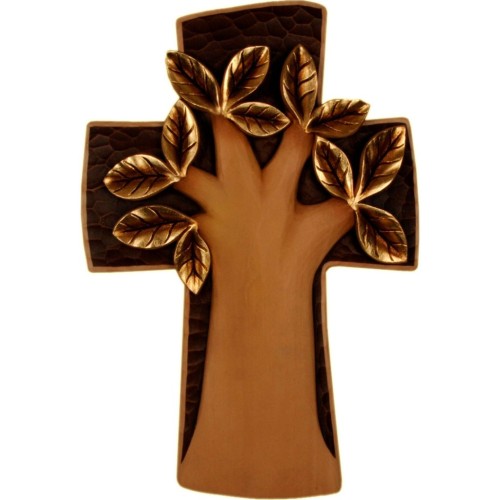
Choralis Wood Art therefore offers you artifacts that are a celebration of life and motherhood. Works that express hope in a beautiful, artistic way, such as beautiful wood carvings with the symbol of a candle, which is a sign of eternal life, or unique crosses that express firm faith and hope for eternal life.