Do you know what happened on Palm Sunday? Why is Maundy Thursday called this way? Or who determines the date of Easter? We offer you an explanation of the meaning of the most important holidays of all Christians.
Easter
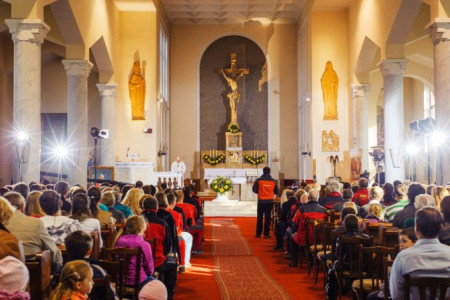
The night before Easter Sunday Christians come to church with candles whose light illuminates the night darkness.
We celebrate Easter once in March and another year in April. Do you know why this is so? In the 4th century the Church stated that Easter always falls on the first Sunday after the spring full moon. So, Easter Sunday can be celebrated from March 22 to April 25. Other feasts, which we call the movable feasts, also depend on the date of Easter: for example, Ascension Day, Whitsun, but also Ash Wednesday and others.
Palm Sunday
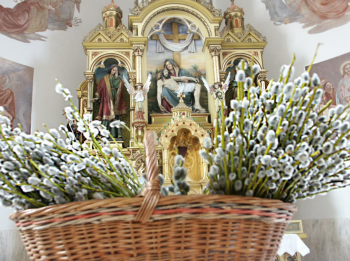
Palm Sunday is the Sunday before Easter Sunday. It's the beginning of Holy Week. The New Testament states that on this day, Jesus Christ entered Jerusalem solemnly, sitting on a donkey (as an allusion to King David) and the people who considered him the promised Messiah welcomed him. They laid their clothes on the way, palm and olive branches, which created a kind of "red carpet" for the coming Messiah.
Maundy Thursday
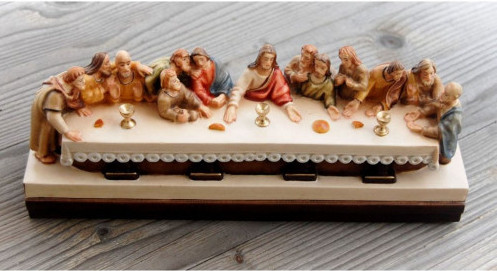
On Maundy Thursday, Jesus celebrated the Last Supper with his disciples.
Maundy Thursday is a reminder of the establishment of the ceremony known as the Eucharist. This happened at the Last Supper that Jesus celebrated with his disciples on the eve of his death. Holy Mass – celebration of the sacrament of Eucharist, which is celebrated in catholic churches, is associated with this event. Leonardo da Vinci portrayed the Last Supper on his famous fresco. You will find it on the front wall of the refectory of the Church of Santa Maria delle Grazie in Milan, Italy.
However, Maundy Thursday is also reminiscent of other events: the fact that Jesus washed his disciples' feet and called them to serve one another. Later in the Garden of Gethsemane, he fell into the hands of his persecutors because his disciple Judas had betrayed him for 30 silver pieces and a kiss. Therefore, the kiss of Judas is referred to as the symbol of betrayal. The origin of the name Maundy Thursday is not clear. One explanation could be in the Old Germanic words "grunen" and "grinan", which means to weep or cry, as a manifestation of grief over Jesus' captivity.
Good Friday and Holy Saturday
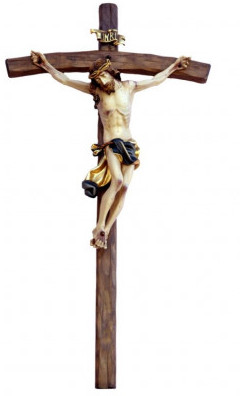
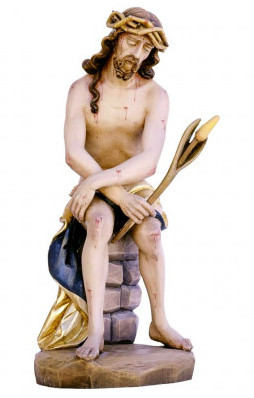
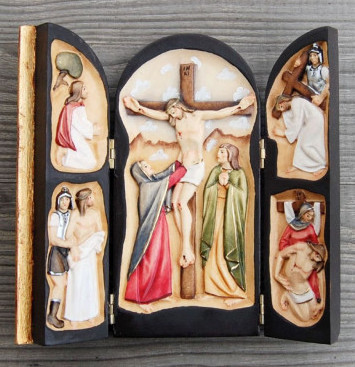
The depiction of the crucified Jesus is the most significant symbol of Christianity.
On the night after his captivity, Jesus was placed before the Roman governor in Judea Pontius Pilate and sentenced to death on Friday morning by crucifixion on Golgotha. The form of execution by crucifixion was very widespread in ancient times and complied with Roman law. According to the Gospels, other convicts died on this day with the same death as Jesus.
Fifteenth hour of the day is considered to be the hour of Jesus' death, so Good Friday services are held at 3 p.m. White Saturday is a day of funeral rest. Churches are not held services on this day and the altars are without candles and flowers. The Easter Vigil is not held until after sunset, because, according to Jewish custom, a new day has come. Easter Vigil is already the celebration of Jesus' resurrection. This ceremony begins with a procession with a lighted candle to a previously dark temple.
Easter Sunday and Easter Monday
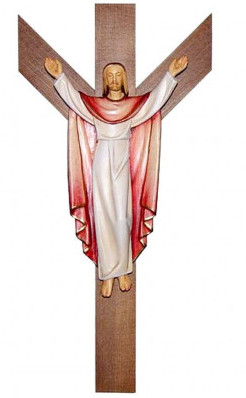
On Easter Sunday Christians celebrate the resurrection and victory of life over death. According to the Gospel of Matthew, the angel rolled the stone that closed the tomb of Jesus. When they came to the woman's grave, they found that the grave was empty. The angel told them that Jesus had risen from the dead. Easter is the biggest holiday of Christians and the central event of their religion. Jesus' resurrection strengthens faith in life after death. According the New Testament, two disciples met with their Lord. Until then, they doubted his resurrection, but now they are happy to spread the word.
Ascension Day
Ascension Day is a feast celebrated 40 days after Easter Sunday and it falls always on Thursday. Bible book Act of apostles state that Jesus was with his disciples when the cloud caught him and carried him to heaven.
Whitsunday
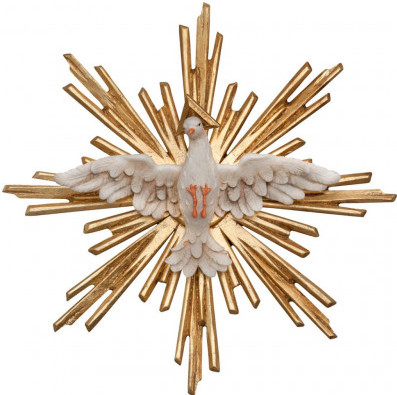
Pentecost also called Whitsunday (sometimes Whitsun) or Holy Day of Pentecost is held 50 days after Easter Sunday. The Greek word "pentekosté" means fiftieth. It is a feast of the Holy Spirit, who appeared to the apostles. Pentecost is a celebration of the "outpouring" or "sending" of the Holy Spirit. This event was the starting point for the missionary work of Jesus' disciples. The missionary mandate is at the heart of Christianity, which distinguishes it, for example, from Judaism, which does not know active mission.