The cross is one of the most important symbols of Christianity. It stands on the top of the mountains, hangs on the walls and is worn as a jewel in the form of pendants on a chain. But why is the cross – a sign of cruel pain and death, the key symbol of a religion whose main message is the hope of redemption and resurrection? Since when is the cross worshiped and why is it still relevant?
History of the cross
Anyone who knows the medieval scenes of the crucifixion may think that the cross has been a central symbol of Christianity since its inception. However, in the early days of Christianity, the so-called "staurogram" and Christ's monogram "XP" played a much larger role.
The worship of the cross as a symbol has been documented since the 4th century during the reign of Emperor Constantine the Great. The cross that is still used today is also called the “crux immissa” or Latin cross.
The cross refers to the scene of the crucifixion of Jesus Christ described in the New Testament. According to tradition, Jesus himself had to carry the cross on which he was to die to the place of execution.
When Emperor Constantine authorized Christian religion and his successor Theodosius even declared it the state religion, the crucifixion was removed from the punishment list and the symbol of the cross lost its unflattering form of execution.
However, the cross was not an unknown symbol even for the Gentiles. Crosses and cross-like symbols were an integral part of the pagan faith. The "sun wheel" is still known in this connection.
Isolated findings such as the Italian ivory box from around 420 A.D prove that the biblical scene of the crucifixion began to appear gradually. In the early Middle Ages, when the cross appeared in illustrations of biblical stories, it seemed a logical consequence to depict not only the symbol of Jesus' execution, but also a group of mourning women gathered around the cross.
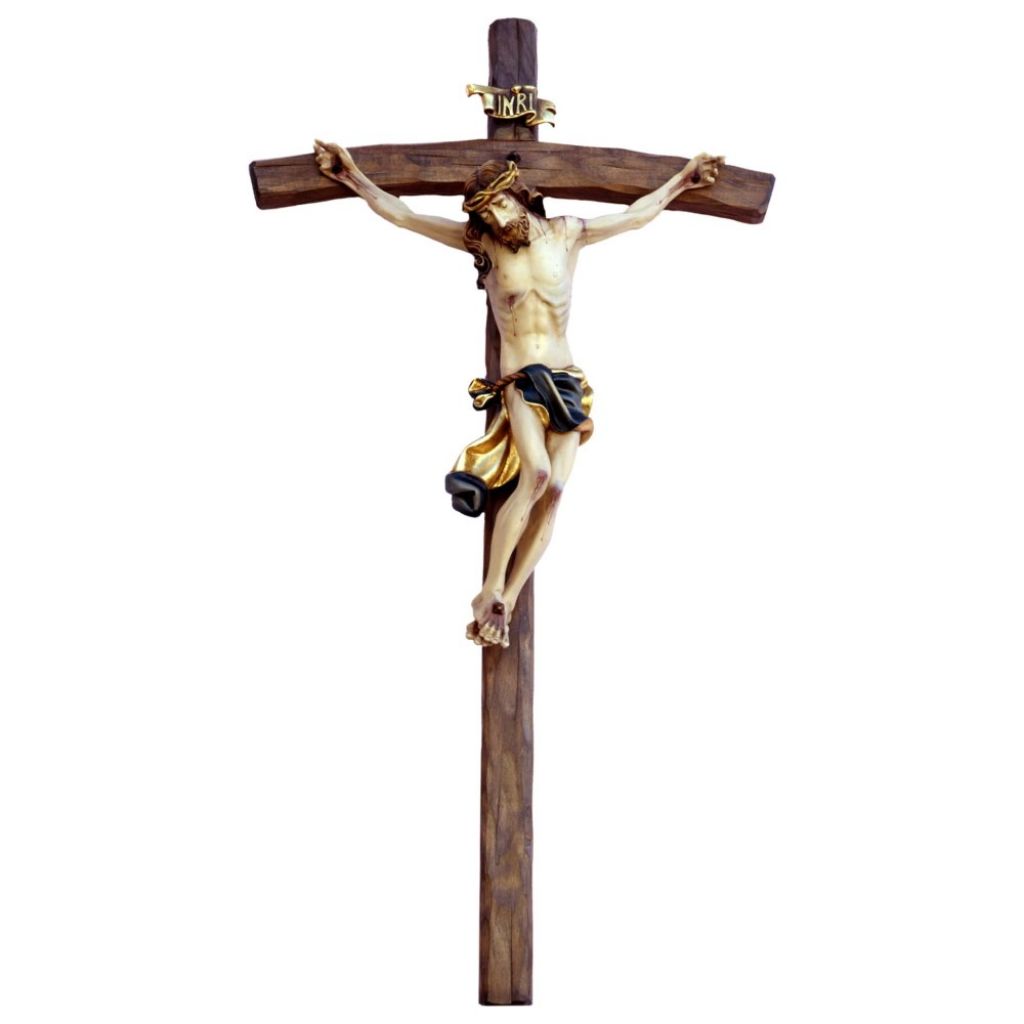
During the High Middle Ages, it became a tradition in Europe to depict the cross with the suffering Jesus. Crosses with the figure of Jesus are also known as "crucifixes". As the cross's popularity grew, so did the cult of the relics: crusaders and researchers were convinced that they had found nails or even wooden fragments from the cross of Jesus.
During the Middle Ages, groups of people arranged around the cross became increasingly diverse. Suddenly it depended on which direction Jesus bowed his head adorned with a crown of thorns. If Mary, Mary Magdalene, a group of women and Apostle John are depicted on the left side of the crucified, then those who mock Jesus are on the right side.
Last but not least, it was a traditional woodcarving, thanks to which the cross became an important object in many churches and households in modern times. Despite discussions of state neutrality in matters of faith and religious symbols in public spaces, crosses are still ubiquitous in countries with a Christian character.
What the cross really means
In the past, passionate theological disputes arose over the significance of the cross. It is difficult to answer unequivocally to the question of the significance of the symbol of the cross in the Christian faith. In the Bible, the cross appears in the Gospels, the Acts of the Apostles, and the letters of the apostle Paul. Whether the crucifixion of Jesus really took place on the cross or on the peg cannot be interpreted with certainty, because the Greek translation can mean both "wood" and "cross". Only the translation of the New Testament into Latin clearly speaks of "cross" and "crucifixion".
The crucifixion of Jesus created a connection between the sky and earth. The horizontal axis of the cross usually means terrestrial and connected to humans. The vertical axis attaches importance to the union of heaven and earth, human and divine. Theologians see Jesus' crucifixion as God's intervention to renew the covenant between God and man, which has been broken since original sin.
Thus, the cross can be interpreted as a sign of hope, which means the remission of sins and the reconciliation of God with mankind. Christians also see this symbol as a sign of victory: by the resurrection that followed the crucifixion, death was definitively defeated. According to the church's interpretation, the scene of the crucifixion points to the sacraments of the Eucharist and baptism, so the cross is often found on baptismal candles.
The cross in everyday life
The cross has an important meaning for every believer. In the cemetery it provides consolation and hopes for the victory of life over darkness. High at the top proves that God is high above all things. And the wooden cross on the wall of the school or town hall is a strong expression of Christian culture.
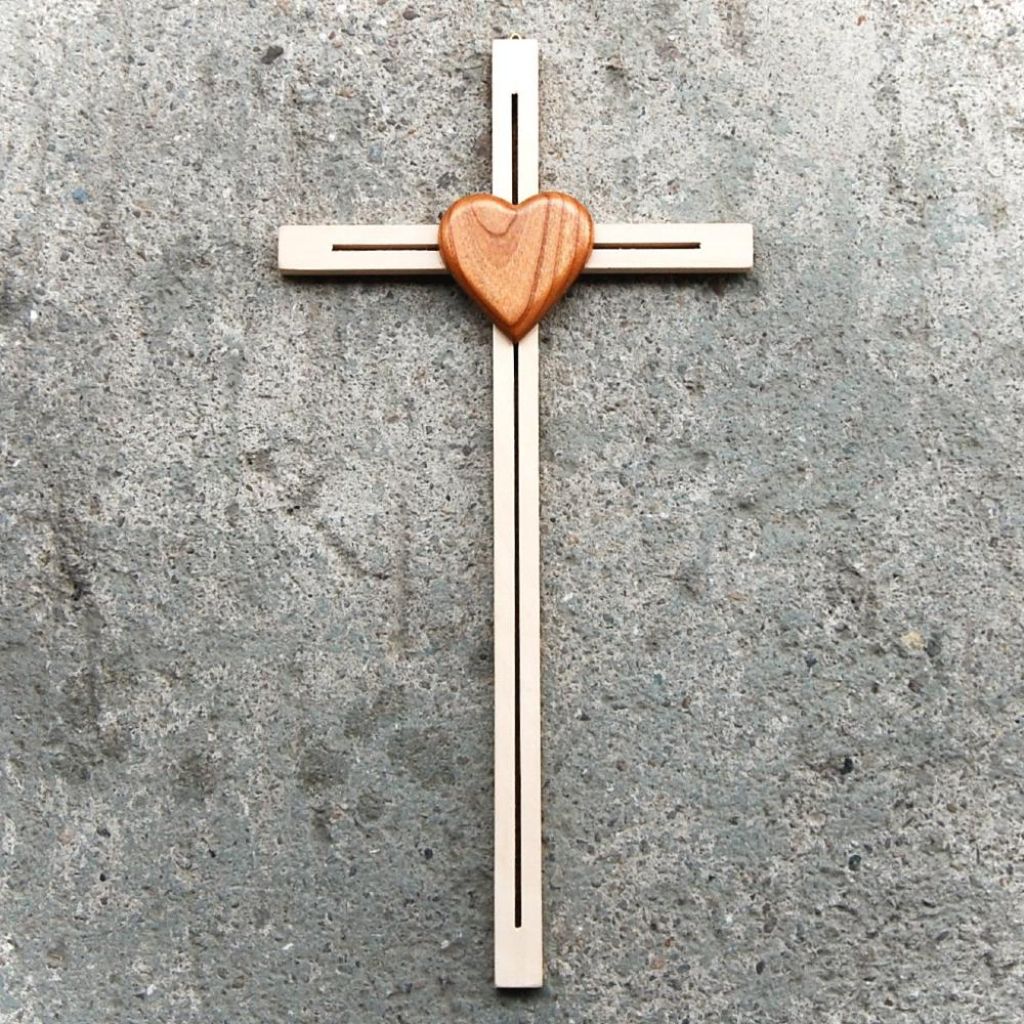
If you want to hang a cross in your living room, you will find the right cross according to your taste in traditional woodcarving. A wooden cross is a reminder of everyday thinking about faith in the household. But it can also be a request for God's spirit to enter the house. Anyone who sees a hand-carved wooden cross will inevitably want to take a closer look. The cross always encourages reflection and forces non-religious people to think about the basic issues of life.
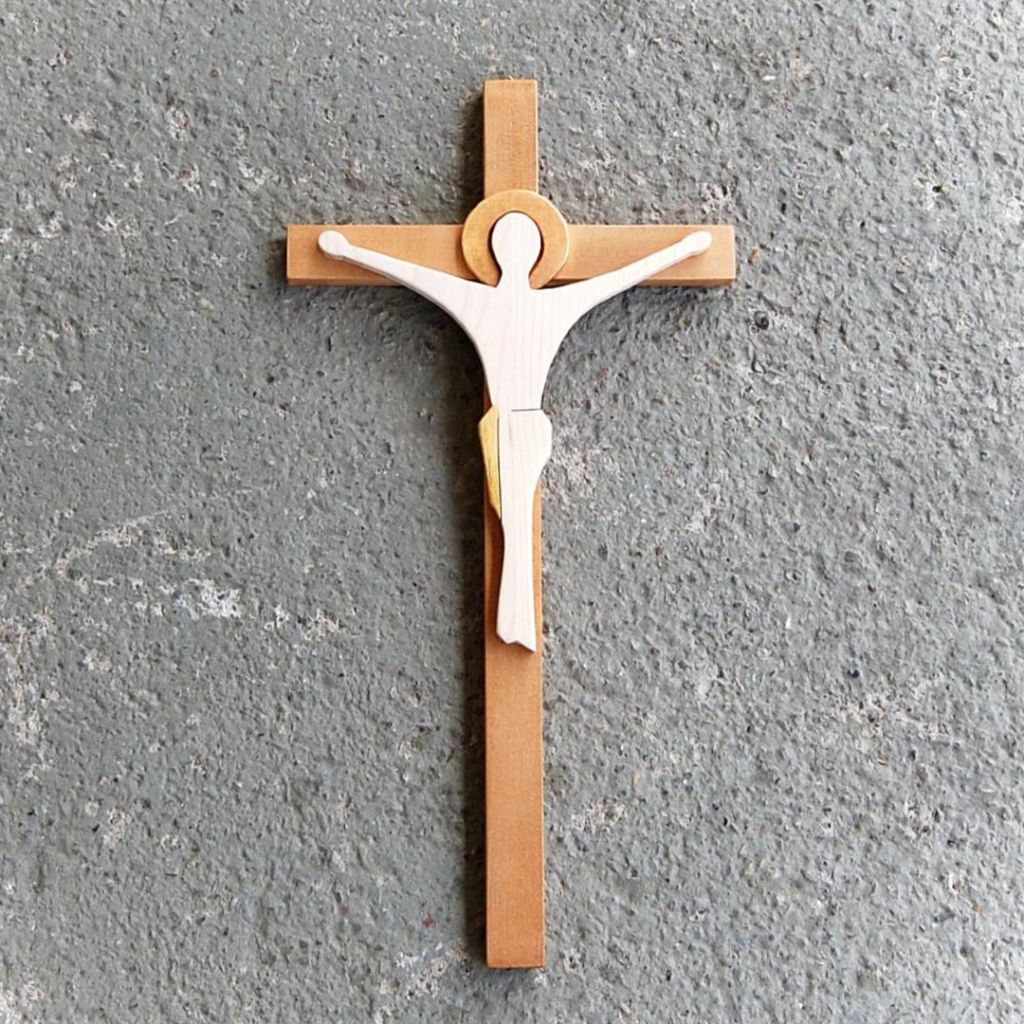
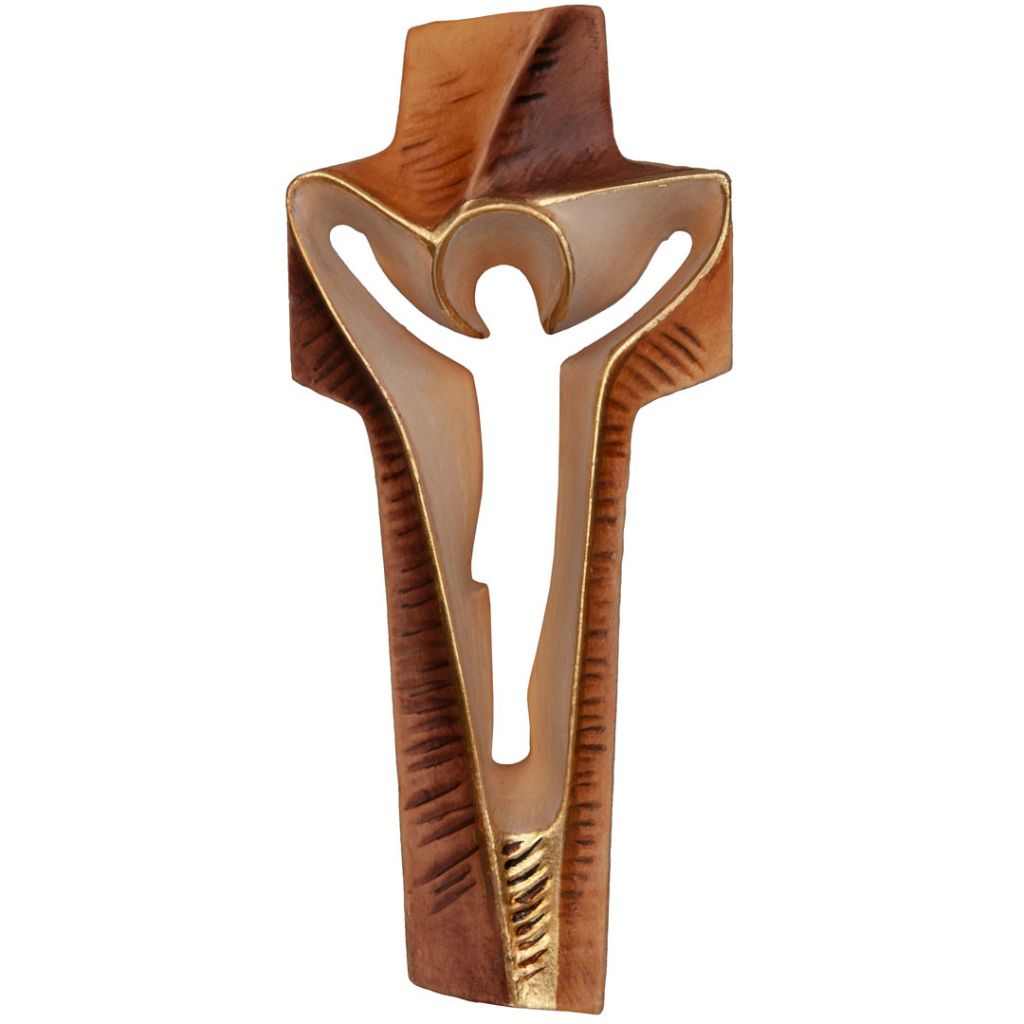
Wooden crosses are available as classic symbols or artistically carved crosses. In some regions, a carved wooden cross is found in almost every house. Wall crosses made of wood, silver, slate, bronze or other natural material look traditional and modern at the same time. Young people also wear the cross self-confidently like a tattoo or a pendant on a piece of jewellery. It is precisely because of the form and spiritual significance of the cross that this symbol is likely to remain relevant forever.